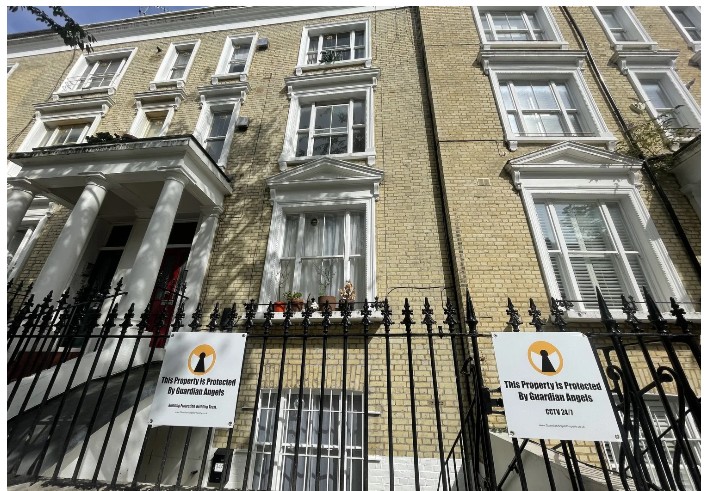
Not every guardianship scheme triggers HMO licensing, but a meaningful number do, and it's usually the number of occupiers that decides it, not the size, age or history of the building.
The threshold that actually matters
Since October 2018, mandatory HMO licensing in England has applied to any house in multiple occupation with five or more occupiers, forming two or more separate households, who share a kitchen, bathroom or toilet. Crucially, this applies regardless of how many storeys the building has.
That last detail catches people out. The older rule, limiting mandatory licensing to buildings of three or more storeys, no longer applies. A large single-storey former commercial unit or a modest two-storey building can still fall within scope purely on occupier numbers, which means most multi-guardian schemes in larger or converted buildings need a licensing assessment as a standard part of setup, not as an afterthought once people have already moved in.
Exemptions don't automatically survive a change of ownership
Some buildings carry licensing exemptions under Schedule 14 to the Housing Act 2004, for instance certain buildings managed or controlled by a named educational institution. These exemptions attach to the specific owner or controlling body identified in the exemption, not to the building itself. When ownership or control changes, an exemption that applied under the previous owner doesn't simply carry over. Any change of ownership should prompt a fresh licensing check before guardian occupation begins or continues under the new owner.
Temporary Exemption Notices aren't a workaround
A Temporary Exemption Notice can give an owner a limited window, typically up to three months, extendable once, where genuine steps are being taken to bring occupancy below the licensing threshold or otherwise resolve the building's status. It's designed for owners actually changing the situation, not as a repeatable way to avoid licensing while occupation carries on unchanged. If a building is going to keep operating at the same occupancy level long-term, leaning on a TEN is more likely to create risk than avoid it.
Compliance that comes bundled with the licence
A licensed HMO typically needs several things in place at once, not just the licence itself:
- A current fire risk assessment, with any required actions actually completed.
- An up-to-date Electrical Installation Condition Report, reflecting the higher load of a multi-occupied building.
- Annual gas safety checks where the property has a gas supply.
- Adequate escape routes, fire doors and detection suited to the building's layout and occupant numbers.
These are ordinarily the owner's responsibility under the licence conditions, and local authorities expect to see them genuinely in place, not scheduled, before granting a licence.
Getting the order right
The right sequence is compliance first, occupation second. Before any guardian moves in, we check whether the intended occupier numbers and household structure will trigger HMO licensing, review the status of any existing exemption against current ownership, and confirm where the building stands on fire, electrical and gas compliance. Where work is still needed, guardian placement is planned around finishing it, since a licensing or fire safety gap discovered after people have already moved in is a far harder problem to fix than the same issue caught in advance.
Looking at guardianship for a larger or multi-occupancy building? We assess the licensing and compliance position as a standard part of our initial survey, before any guardian moves in.
This article summarises HMO licensing requirements in England as at August 2026 for general guidance only. Licensing thresholds, exemptions and local authority additional licensing schemes can vary; always confirm requirements with the relevant local housing authority.