
Owners protecting a vacant building are usually choosing between three routes: board it up, pay for patrols, or place guardians in it. They don't cost the same, and they don't achieve the same thing either. Here's how they actually compare.
Boarding up: cheap to start, expensive to maintain
Boarding a building's windows and doors looks like a low-cost fix, and the materials themselves are relatively inexpensive. What isn't cheap is what follows: boarded properties are frequently targeted precisely because they look abandoned, so repeated repairs, replacement boards after break-in attempts, and ongoing site checks add up over a long vacancy. The building also becomes progressively less presentable, which matters when it eventually needs to go back on the market.
Manned patrols: presence without continuity
Scheduled guard patrols provide a visible presence at set times, but only at those times. A property visited twice a day for fifteen minutes is unwatched for the other twenty-three and a half hours, and a determined trespasser only needs one of those gaps. Larger commercial buildings with round-the-clock manned guarding can run into five figures a month, a substantial recurring cost that delivers no return beyond deterrence, and imperfect deterrence at that.
Guardianship: how the cost structure actually works
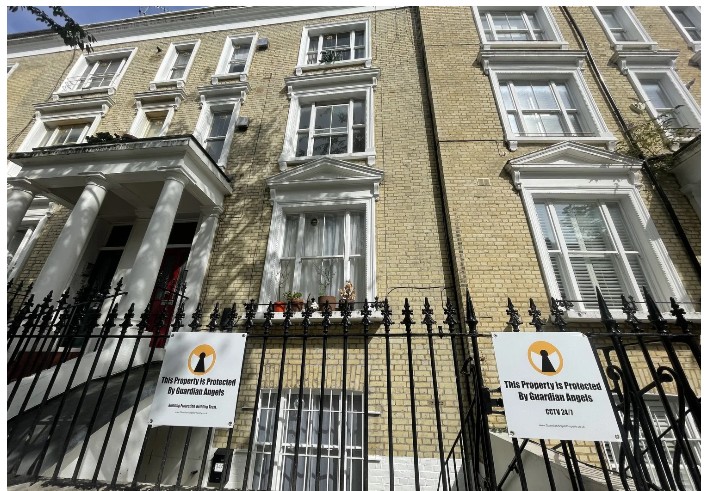
Guardians pay us a below-market licence fee to live in the property, and that fee funds the scheme, not a charge to the property owner. There's no management fee payable by the owner under this model. The building is occupied continuously rather than visited periodically, which is a meaningfully different level of protection to either boarding or patrols, at a materially lower cost.
What this typically means for an owner's costs
Removing patrol or guarding spend is the most obvious saving, but it isn't the only one. Continuously occupied buildings are usually viewed more favourably by insurers, since the main risks associated with vacancy are reduced from day one. Maintenance issues tend to surface early rather than being discovered on a routine visit weeks later, which keeps repair costs down. And because the building is genuinely in use, its position on business rates can also improve compared with sitting empty.
The savings compound the longer a vacancy runs
The comparison gets more pronounced the longer a property sits empty. A short void might not justify setting up a guardianship arrangement at all, but for buildings caught in planning delays, a slow sale, or a lengthy probate process, running months or years, the gap between what boarding and patrols cost and what guardianship costs widens considerably, all while the building itself stays in noticeably better condition.
Currently paying for security on an empty building? Let's work out what a guardianship arrangement would look like for your property.